Dead Average to 1st Place in Six Months: How We Won the Brackeys Game Jam
This is a blog about how we made a game in a week that won a jam with 1,400+ entries. But it’s more than that, it’s a story of redemption...
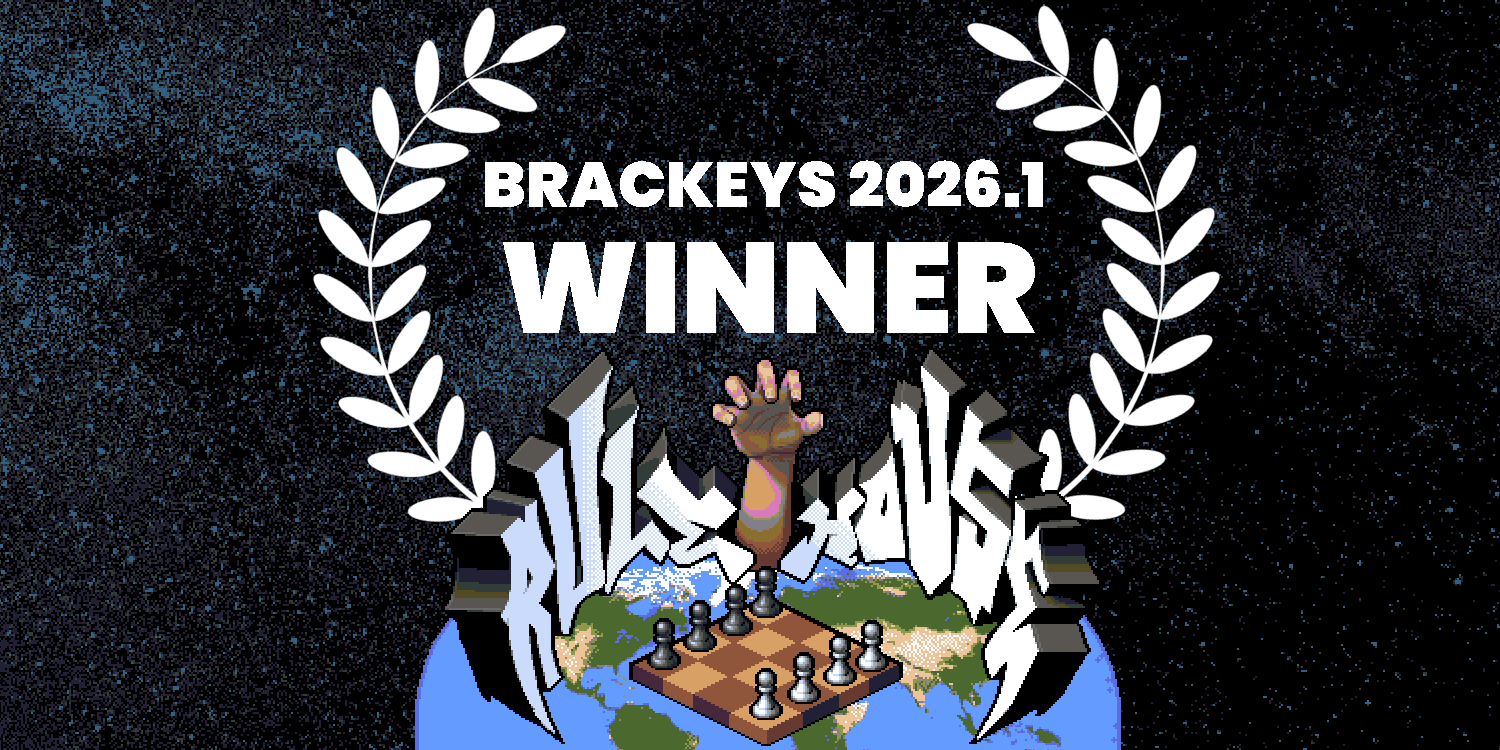
This is a blog about how we made a game in a week that won a jam with 1,400+ entries. But it’s more than that, it’s a story of redemption and recognition. It’s about how a team of four people, none of whom are professional game developers, that went from barely finishing a game that landed dead average in our last jam, GMTK 25, to winning 1st place in the Brackeys game jam. We won in enjoyment, game-play categories and the overall game jam just six months later. So I want to tell you how we failed, learned and quickly turned around to produce our best title ever.
Background
To keep it brief, we are a team of four friends: Jacob Engelbrecht, Ian McBee, Gabriel Soares, and me (aka Dalichrome). This is our third attempt at a game jam. Our first gamejam was GMTK 24, then we did GMTK 25 in August 2025. In the second jam, we did more poorly than our first (you can read about that postmortem here), but to summarize, it was a mess from a leadership and conceptual standpoint. But I learned a lot from that failure, and as the team lead, it made me realize what we really needed to improve on to become more competitive. For our next jam we chose Brackeys jam. Hosted by one of the most popular Unity tutorial YouTubers, it’s generally Itch’s second largest game jam.
The Plan
In this jam, I wanted to relentlessly focus on three things: that we would have time to polish the game, that players would enjoy it, and that our team would enjoy making the game. Makes sense right? But it’s easier said than done.
Time To Polish
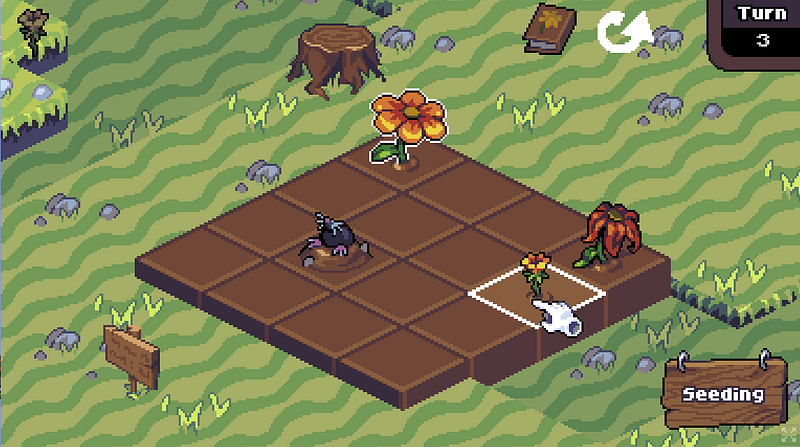
Specifically, I was thinking how we could limit the scope without the knowledge of the jam’s theme. I tried to think about successful jam games that had limited scope that stayed engaging and fun. The game Flora in GMTK25 came to mind. A game my friend had really liked and showed it to me. With its jazzy music set to cozy puzzles about growing flowers and having moles eat those flowers, I thought now this is a polished jam game. Each level is a stage that introduces new mechanics that naturally guides the player into learning them while having fun. I thought we should replicate this format and come up with concepts that are stage-based on this approach of intuitively tutorial-izing players, limiting the scope, and of course, keeping the game fun.
Making it Fun
But every game also needs to be fun. So the second constraint I set for the team was based on how stage-based games always start from a basic mechanic and then build upon it. That the basic mechanic must be interesting and fun in isolation. Essentially, if the game is about jumping, the jumping by itself, lacking music, visuals, et cetera must be enjoyable.
I thought then if we chose a concept that fulfilled those two constraints, no matter how many additional mechanics we had to cut due to time, we wouldn’t sacrifice the soul and enjoyment of the game.
With that in mind, I also set a hard timeline that we’d build a playable version of the game halfway through the jam and I’d bring in friends to act as testers so we’d have new feedback every night to ensure that we could identify and fix unintuitive elements.

I hoped pre-planning this would ensure that we would choose a well scoped and fun concept. I was so focused on getting something polished since our last jam entries never really got there. With these constraints, I still felt that we had to chose the concept in accordance to what our team team was good at in order to really accomplish a great jam game.
Choosing the Concept / Making it Fun to Develop
When choosing a concept, I’ve learned the most important thing is to not choose what you think others wont do. It is not to choose what sounds the best or to not choose what will make the best game. But instead to choose something that your team can excel at and will enjoy doing. I heard a lot from both my friends Jacob and Ian that they wished they could code more. They both are career programmers and not game developers, so when we were choosing concepts, I tried to keep this in top of mind. The theme of the jam was “Strange Places” and we did some brainstorming and eventually, three ideas stuck out:
- A platformer about environments made of silhouettes that a flashlight reveals are not what you think they would be.
- A game about drawing triangles that disappear ships.
- A game about playing a board game that has a whole bunch of strange variant rules, where one rule gets added a stage.
The platformer, I think, failed the basic mechanic is fun rule. The triangle game seemed like a great idea, but it seemed code-light to me. A lot of it would be physics work and ship AI work which would be a lot interacting with Unity API and or our AI pathing package. The board game idea didn’t really sound fun, but I knew we just had to design it so that the core part was fun and it would meet all my other constraints. I also thought maybe if we based it on chess, Jacob and Ian would be able to spend all their time outside the Unity API making their own chess API and I could hook everything together. This way the concept would maximize what they wanted to do and are good at and met all the constraints I was thinking about. So I basically tried as hard as I could to convince the team that despite the fact that it did not ‘sound sexy’ that the many chess variants game would be the best for us.
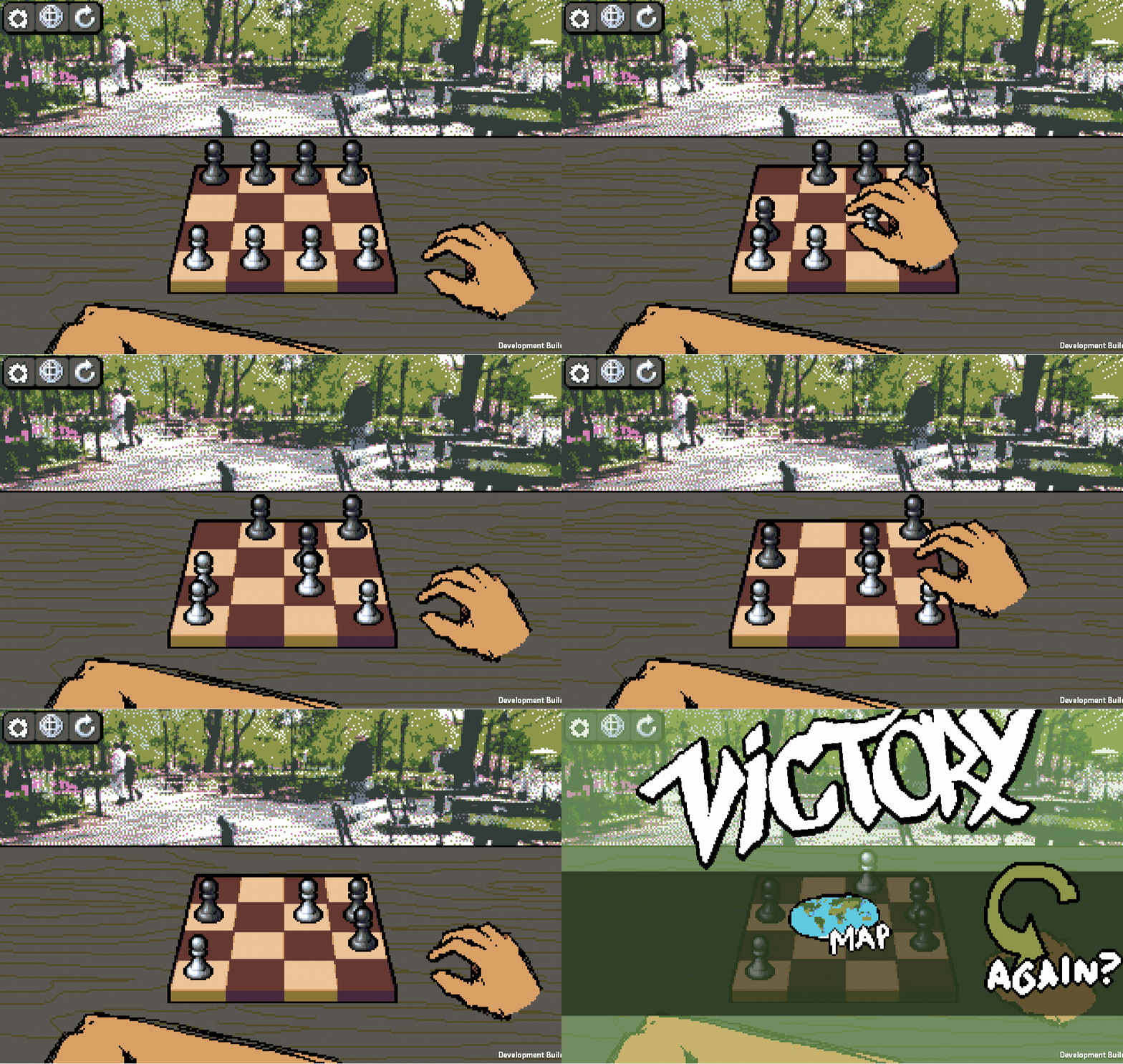
Everyone was really hesitant. It wasn’t really like any concept that we had done before (most which used random generation), but everyone was willing to hear me out. With enough explaining, everyone started to feel excited about the concept. But we still needed to decide on the core mechanic. I had imagined that the simplest form of chess would just be the simplest pieces on a small board fighting each other. I thought about four pawns against four pawns on a 4 x 4 where the first pawn across wins. But I was unsure if it was fun or viable to be the base of the game. So we tested it.
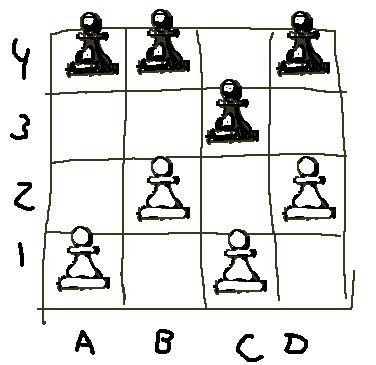
We drew the concept in paint.net and played by just giving each other coordinates and by moving the pictures into the right spot. Even just on the 4x4, we actually had to think a little bit and eventually we decided… yeah this is fun.
So with that, we locked in the theme and started working.
Development
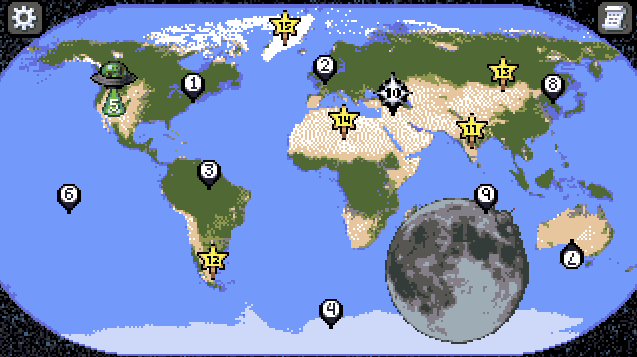
We split the roles pretty cleanly, I acted as director/artist/UI developer. Jacob worked on mechanic design and chess back-end. Ian did some UI, some design work and a lot of dialog writing. Gabe did all the music and sound effects. Our primary concern was getting a prototype up and running where someone could play the game against an AI. But since Gabe needed direction for music, we first outlined a quick story. Some world event has led to the creation of ‘pawn chess’ and our main character wants to go and conquer all varieties of the game, become the first world champion of this new game. He learns how to play in a NYC park, then learns about the “en passant” in Paris, gets the new ‘poison pawn’ in the Amazon, gets the 5x5 board in Antarctica, and finally gets the knight or the ‘cow’ piece in the UFO for stage five. With that rough outline, he set off on the music and we began to code.
UI Design
I was in charge of the UI Design and from the get-go, I wanted to have a very tactile and visceral type of chess. Nothing like the clinical and clean interface of ‘chess.com’. I wanted to instead have something grounded and with character. So instead, I wanted a board with perspective and players to have hands and hands to express the character of the opponent. I thought that adding silly hand movements was a quick and easy way for players to figure out the vibe of the game. That they were playing and to not just get hooked into the game-play, but also the world of the game. I started with referencing my own hands for the player and scratched up some simple picking up and idle hand frames.
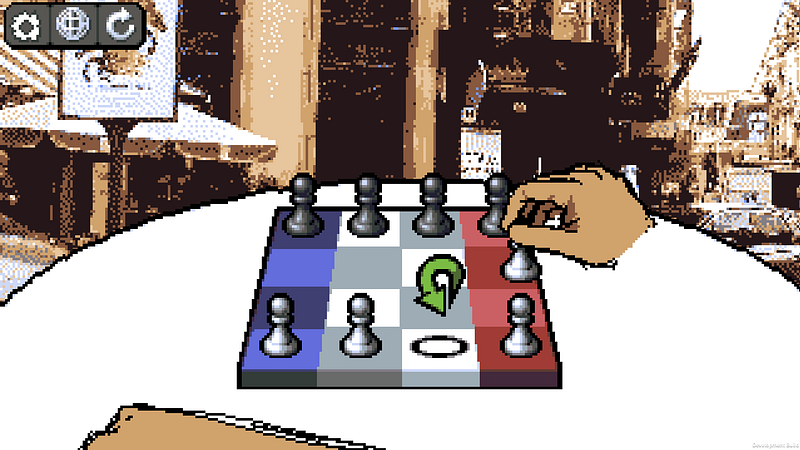
For removing pieces, I had the idea that the player would just chuck the piece off the board which I think captured exactly the vibe I was looking for. After I had the player hand set up, I transitioned to getting the map working.
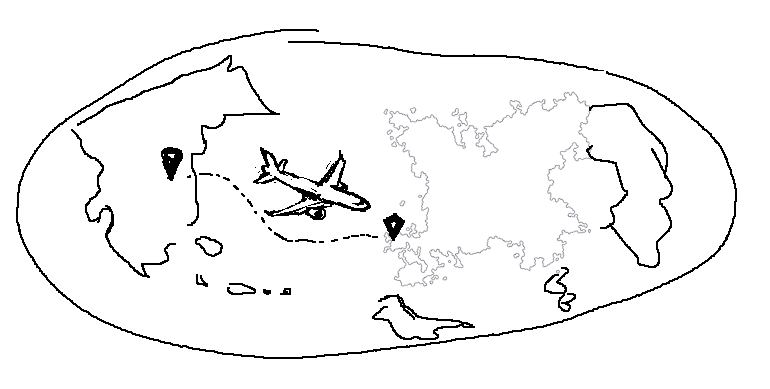
For the map, I really just wanted something incredibly intuitive that made people feel like they were visiting different places. So a world map was chosen with little google maps style pins and numbers. It was cheap and easy, but we wanted to have a little line renderer create a line between pins like an Indiana Jones movie, but alas time constraints again.
Essentially I just wanted everything to be as easily understood as possible, so we could reduce tutorial-izing as much as possible. That included the hands, map and of course the chess itself and the design of the pieces.
Game Design
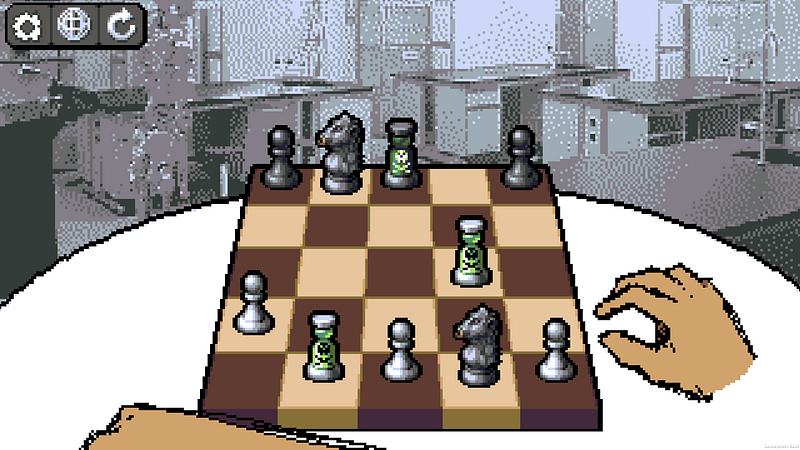
The game within the game, ‘pawn chess’, as we started calling it, really focuses on constrained movement. Pawns themselves are very restricted pieces and the joy of the game we believed really came from this locked down and limited option game-play. So when we designed new pieces, we wanted to add new pieces that were similarly constrained. The poison pawn, introduced on level three, destroys any piece that takes it and moves like a normal pawn. The ‘cow’ piece introduced in level five was just a knight, but it could not win the game. Jacob was coding the AI and doing the stage design and was able to get these and more coded in before our first build.
The Prototype
So with the UI done and the back-end done, it was all about wiring them together. Jacob and I did quite a bit of coordinating in tying the back-end to the UI. Then I quickly wired all the new stages he had made to the map and with that we had a minimally viable game done on Wednesday just before our testing deadline. So after work on Thursday (yes we all had day jobs during this), we built the game, put it up on a private itch page and waited for my friend and first tester, Jack.
Initial Testing
The choice of who you have testing your game is really important. You want someone who is honest, likes the genre you’re shooting for, gives good advice and won’t forget to show up. Jack is all those things and a great guy so I was very happy that he was our first tester. We just barely had a game, no AI hand, no dialog yet and just five stages. But he really enjoyed it. He blasted through it with little complaints and navigated the map and UI with zero problems. His main criticisms were that he found that the AI moving instantly (since there was no AI hand yet) was confused and that it could use some story or dialog to draw it together. As these were things we were already aware of and working on, I was incredibly surprised. This was the moment I realized this was a good game and our direction was right on the money.
Realization
Oftentimes in jams prior, I found myself delusional about the state and status of my game. I would think only about how my random generation was so cool and impressive when the combat was spammy and goal was unclear. I would think that the second stage is the best when no one could figure out how to get to the second stage. As a developer, you often think about how you want the game to come across, and its incredibly hard to figure out how it really comes across, as its not like you can do a blind play-through. Because of that, I was fully prepared for him to tell me it wasn’t fun, or that the chess felt confusing. But that never happened and instead he said he just wanted it to be longer. I thought, wow we’ve not only accomplished something that is genuinely intuitive and fun, but also something that’s going according to plan. Now if we can polish the hell out of it, then we will have truly made a really good game.
Second Half of the Game
With that realization in mind, I began to double my efforts. This year, I’ve been extremely busy between work, starting marathon training, doing development projects, art practice, and more. I was incredibly burnt out going into this jam and just wanted to simplify the design process as much as possible. So this was the moment I really began to lock in. We spent the next couple days working around the clock, adding the AI Hand, adding the dialog, adding the story, and designing those last five stages as well as having enough time to add five bonus stages.
We were feeling really proud in what we had made and were ready to submit around 1AM, several hours before the deadline. But I remembered that Gabe had given me some ambience tracks to back the music and I just didn’t have the mental wavelength to figure out how to get the ambience tracks looping and persistent between scene loads. This is when Gabe called in as he just finished a Metal show (yes Gabe is in a metal band) and he said as soon as he got home that he would re-render all the music in the game with the ambience in it and I was kinda surprised but also game and said lets do it.
Last Minutes
So as Gabe drove home, I added more hand variants, fixed up some of the ‘table’ graphics (the stump and starting table) and just gave the whole game one more ‘art’ pass. We found a bug that broke the visibility of the clock in WebGL builds (had some async code, that doesn’t work in WebGL) and when Gabe finally came back and rendered the tracks, we quickly put them in the game did a short test, submitted at around 4AM and then we crashed.
Reception
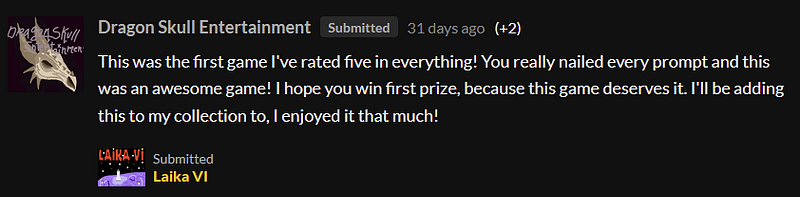
I woke up on Sunday after about 5 hours of sleep and saw all these amazing reviews. People saying they hope we win and that they thought it was ‘full release’ even. A type of positivity we’ve never received before. The whole team was abuzz and frankly in shock that we finally had made a good game in a jam, we were even beginning to believe maybe we could be in the top ten! The next two week were frankly, an anxious waiting game, but it passed surprisingly quickly and before we knew it, results day was close.
Winning
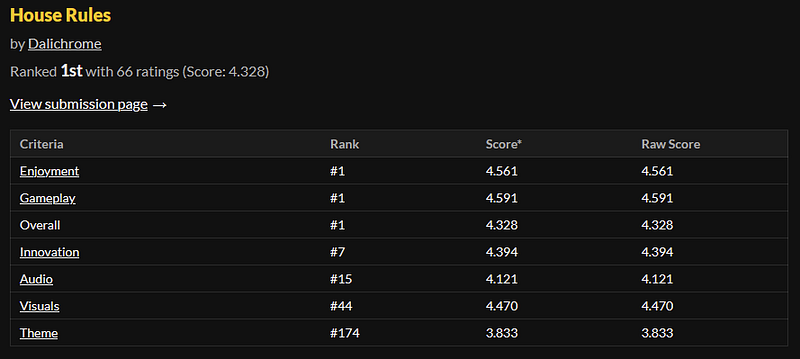
I’m American so the results for the Jam came out on Sunday at 7am EST on the day that Daylight Savings time ‘springed back’. Not only that but, I had had laser eye surgery two days before. So I was wearing goggles to prevent rubbing my eyes in my sleep and woke up what I felt like was the middle of the night, checked my phone, which was super bright and blurry still and saw it was around 7:20 AM. I quickly checked the results and learned that we won first in overall, first in gameplay, and first in enjoyment. The feeling was a mixture of shock, totally overwhelmed, and brimming with joy. I’ve been developing games for more than seven years now and to have such recognition felt unreal and so good, like I finally knew that I was good at this. I then thought immediately I have to let everyone else know and called Gabe as he messaged back first. He was lying in bed with the flu, voice gravely as he hadn’t had a wink of sleep all night. Then Ian called in, turned on his camera, he was on stage about to perform music for his church. And we were all just kind of in this weird state of shock and excitement, trying to figure out, what does this mean?
What’s Next?
Well, its been a couple weeks, we decided that it means, that people like our game! So, we want to keep making ‘House Rules’. In fact, we’ve already renamed the game to ‘Rulehouse’ and made a second patch on itch, with mobile compatibility, pre-moving, and hard-mode. But I want to say how grateful we are to everyone that voted for us in the jam and gave us the opportunity to even think about making a commercial title. We’re still shocked and trying to figure out, how in the hell do you market a game?
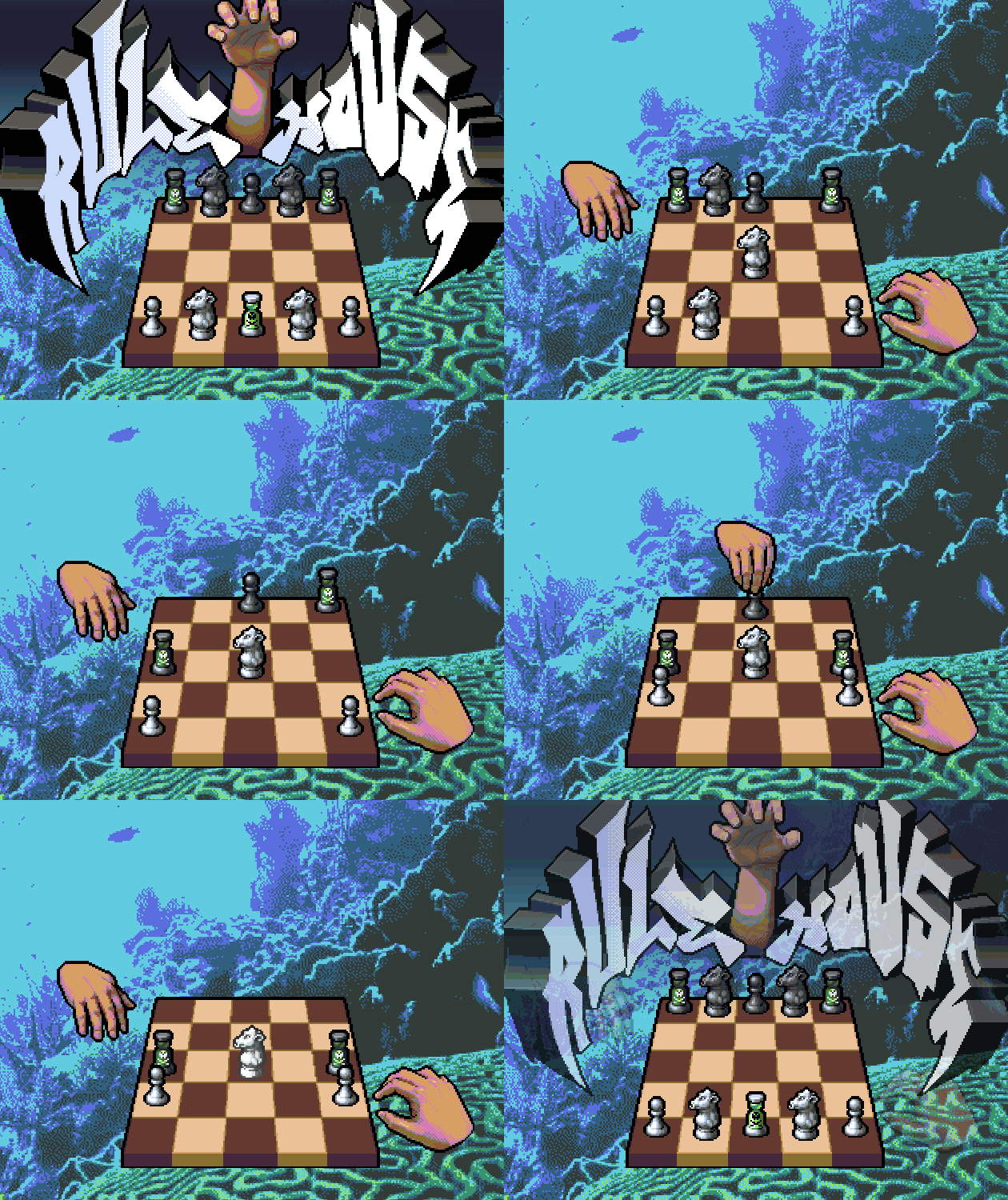
Well for a first step, we made a steam page now for Rulehouse and it’d be great if you could wishlist the game, so we can notify you when it comes out. You can also play the original jam version on itch here if you want to see what it was like when it won.

Anyways thanks for reading and I hope that our story can help others who are looking to perform in jams and wish us luck in trying to convert this success into a commercial one.
Thanks!